
FabVitals Warehouse
Know what is on every cart at the line, and what is being made with it.
Material is requested for each step of an order, moved to the cart or container where it will be used, and consumed against it — so stock at the line and work in progress are on the system, not only on the floor.
Today
The system shows stock in the warehouse, but half of it is already on carts beside the machines. Nobody knows which lot went to which station, shortages appear when the line stops, and the count at the end of the month never matches.
After
Every cart and container is a location with its stock by lot, every delivery to the line answers a requisition, and the board shows which order is being worked where, by whom, and how far it has gone.
What changes
Three things that change on the floor.
Stock down to the cart
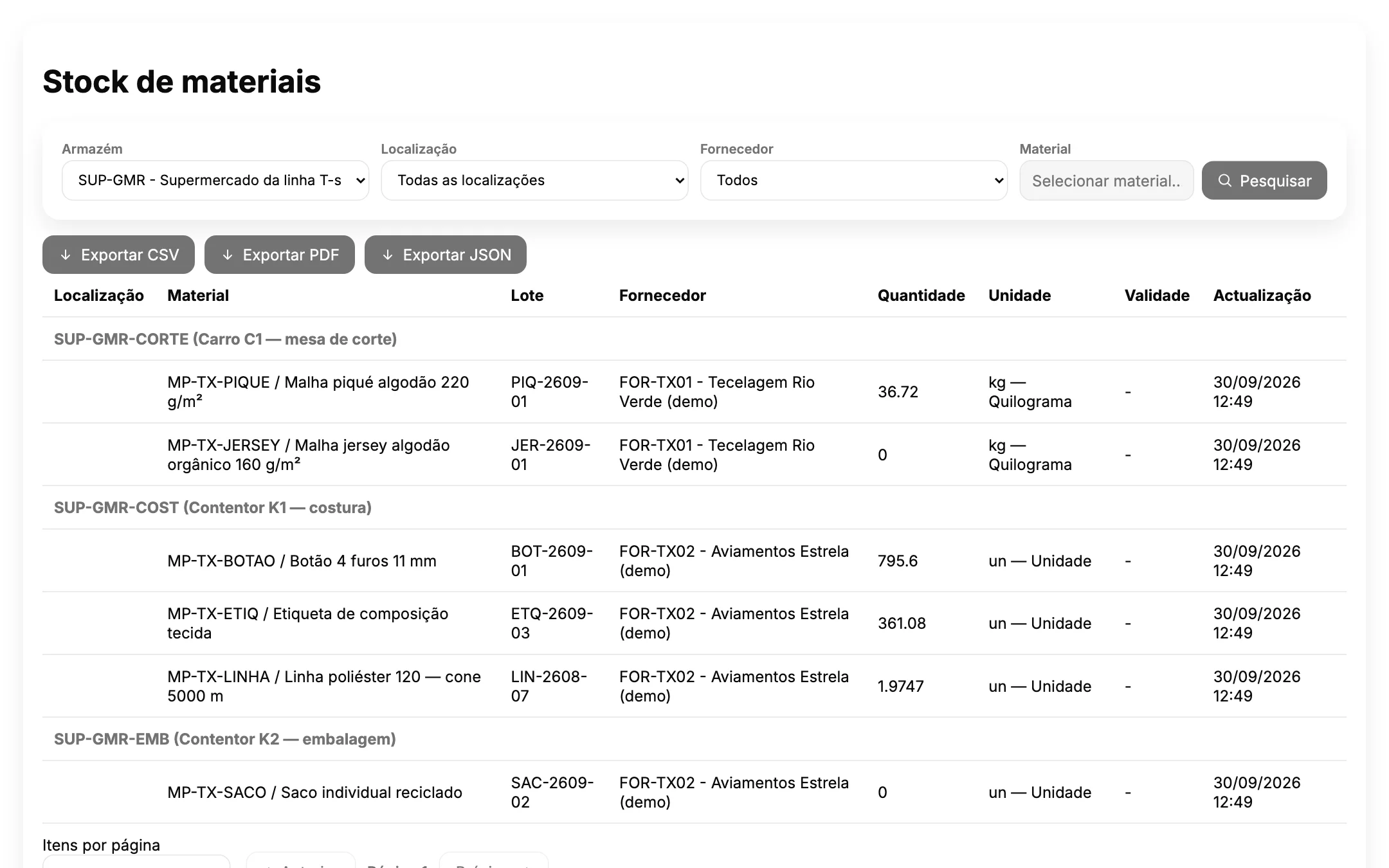
The warehouse, the line supermarket and each cart or container beside the machines are locations in one tree, with capacity, current stock and every lot that is there.
Deliveries that answer a need
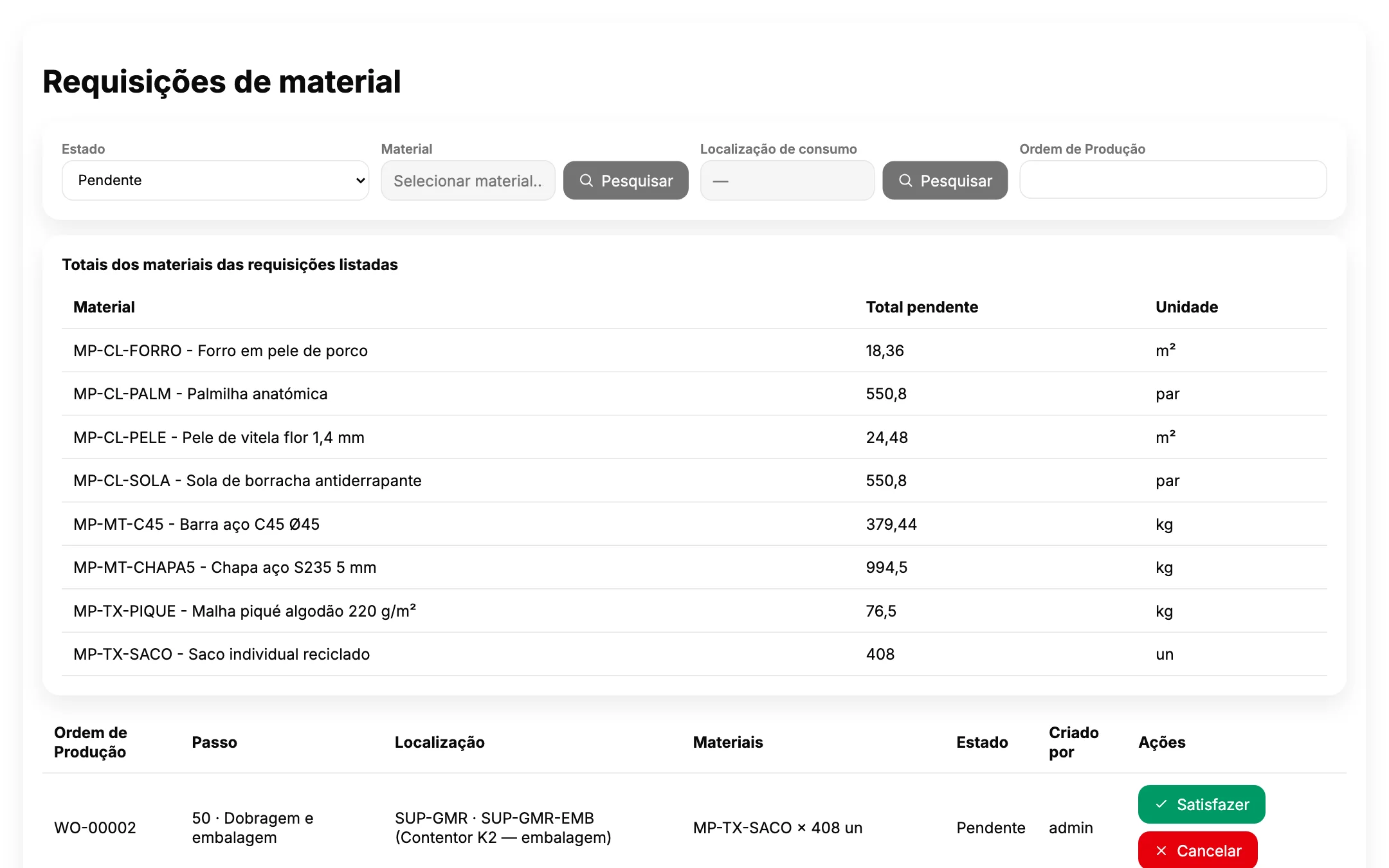
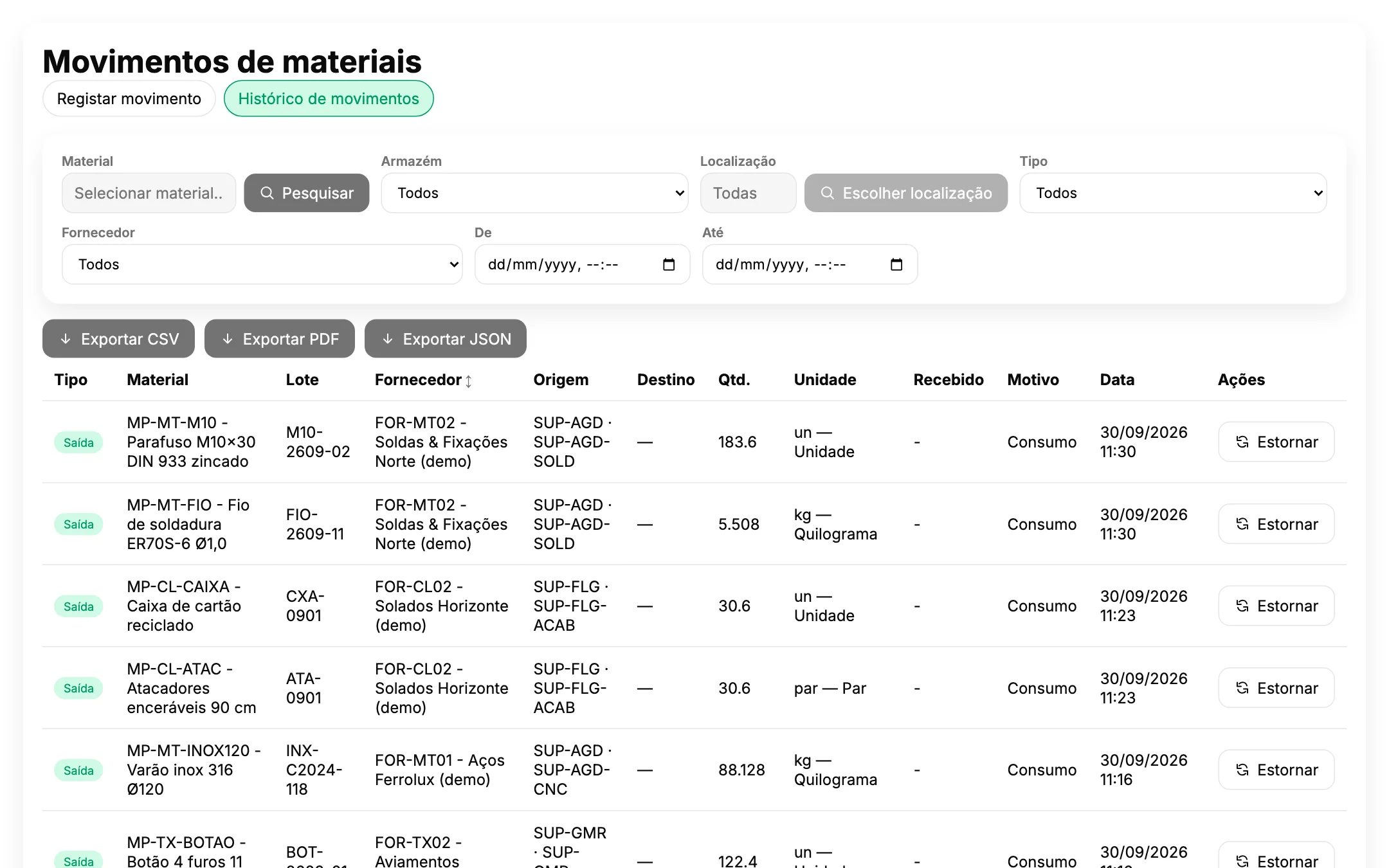
The step of the order asks for its material and where it will be used; the warehouse fulfils it in one go, first-expiry-first-out, preferring lots already at the line to keep traceability clean.
Work in progress in sight
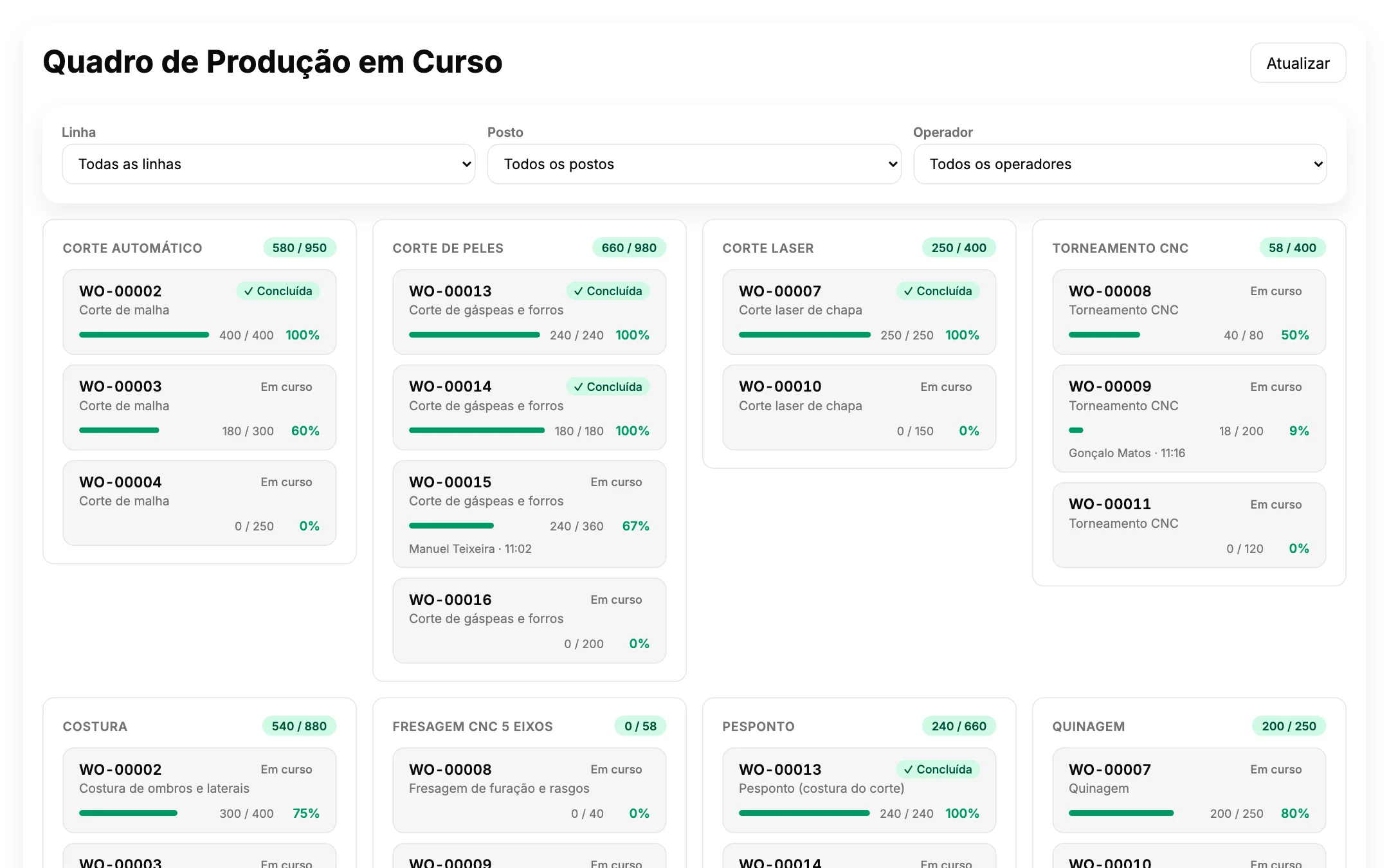
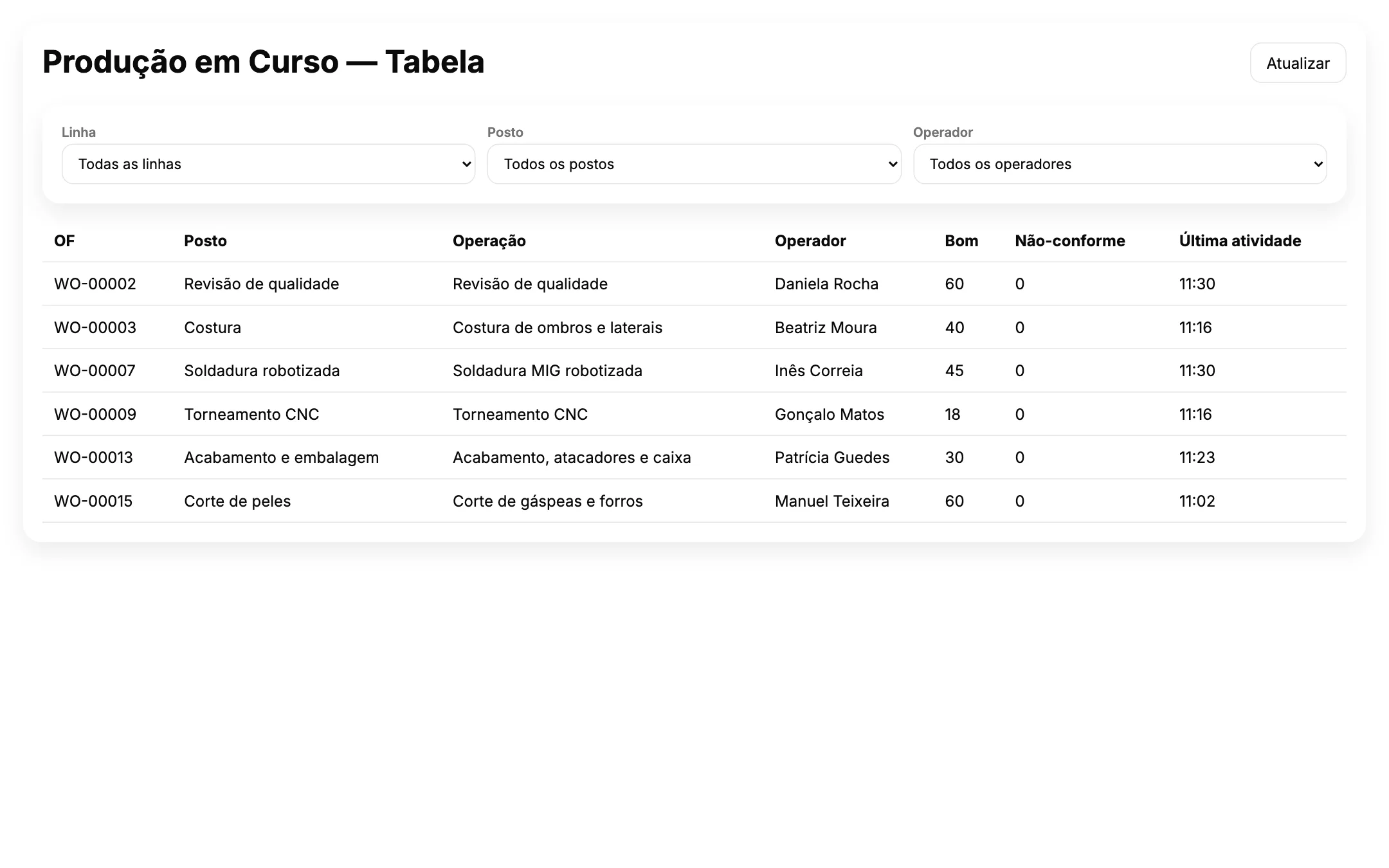
A board by work centre and a table by station show every order in progress, the quantity done, the operator and the last activity — refreshed from what is recorded at the station.
The product at work
From the warehouse to the station.
Real screens of FabVitals, with demonstration data from textile, footwear and metal industry plants.
Material at the line
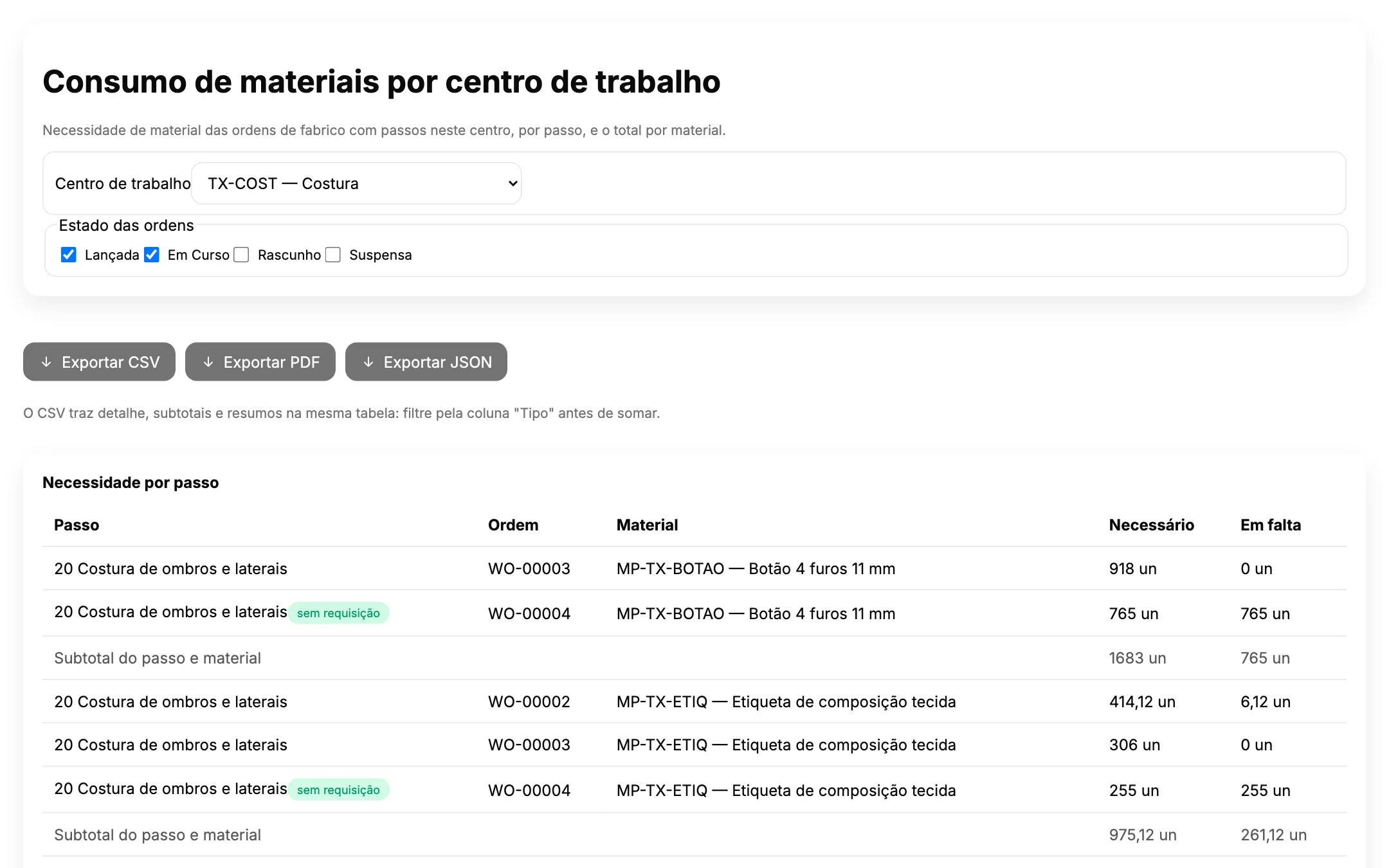
Stock by location and lot, down to the cart at the cutting table and the container at the sewing line. Pending requisitions with the total still to deliver per material, and the needs of the orders at each work centre, with what has not been requested yet.
What is being made, and where
Production in progress by work centre, with the progress of each order and who is working on it, the same view as a table for the line leader, and every consumption at the line on record with its lot — reversible when a mistake is found.
How it works
First we understand your floor. Then we adapt the solution.
The software is the proof, not the starting point. Every project follows the same three steps, and the first one happens where the work happens.
Requirements on the shop floor
We spend time at the lines and stations: how orders arrive, what is recorded today and where, where information gets lost. You get a written summary of what we found, whatever you decide next.
Adaptation to your process
We configure the solution around how you work — routings, stations, units, the words your people already use — and connect it to the ERP you run. Your process does not bend to fit the software.
Start-up, one area first
We go live on one line or one area, train the people who will use it every day and stay close in the first weeks, when the data shows recording habits before it shows production.
Serves your industry
Built on ISA-95, so it fits how your plant already works.
ISA-95 is the international standard for manufacturing operations. The model underneath is the same for any plant that turns materials into products — the examples below illustrate it, they do not limit it.
Textile and clothing
Fabric rolls on the cart at the cutting table, buttons, labels and thread in the containers of the sewing line, bags at packing — each by lot.
Footwear
Leather and linings at cutting, soles and insoles by pairs at assembly, laces and boxes at finishing, delivered to the station that asked for them.
Metal, plastics and other processing
Bar and sheet at the CNC and laser, welding wire and fasteners at the welding cell, with the lot of steel followed into each part.
The same holds for processing in general: wherever there are orders, routings, work centres and materials, the model fits.
Start with your process, not with the software.
The first conversation is about how your floor works today, not a product demo. Then we tell you honestly whether this module, another path, or nothing at all is the right answer.