
FabVitals EPI
The right protective equipment, checked before the work starts.
Each work centre defines the PPE it requires, each operator has what was issued to them with its validity, and the station checks both when a session opens — warning, or stopping the start, as you decide.
Today
PPE records live in a binder or a spreadsheet, expiry dates are discovered at the audit, and nobody at the line knows whether the operator who just sat down at the welding cell has a valid mask.
After
Every operator is compliant or not for each work centre, with the missing item and the reason, expiries are seen weeks ahead, and every exception is on record.
What changes
Three things that change on the floor.
Rules by work centre
Each work centre lists the PPE it requires — ear protection at the CNC, a welding mask at the welding cell, cut-resistant gloves at cutting — and compliance is worked out per operator and per work centre.
Checked at the station
When an operator opens a session, the system checks their PPE. You choose the mode: off, warn and ask for confirmation, or block the start until the missing item is issued.
Expiries seen in advance
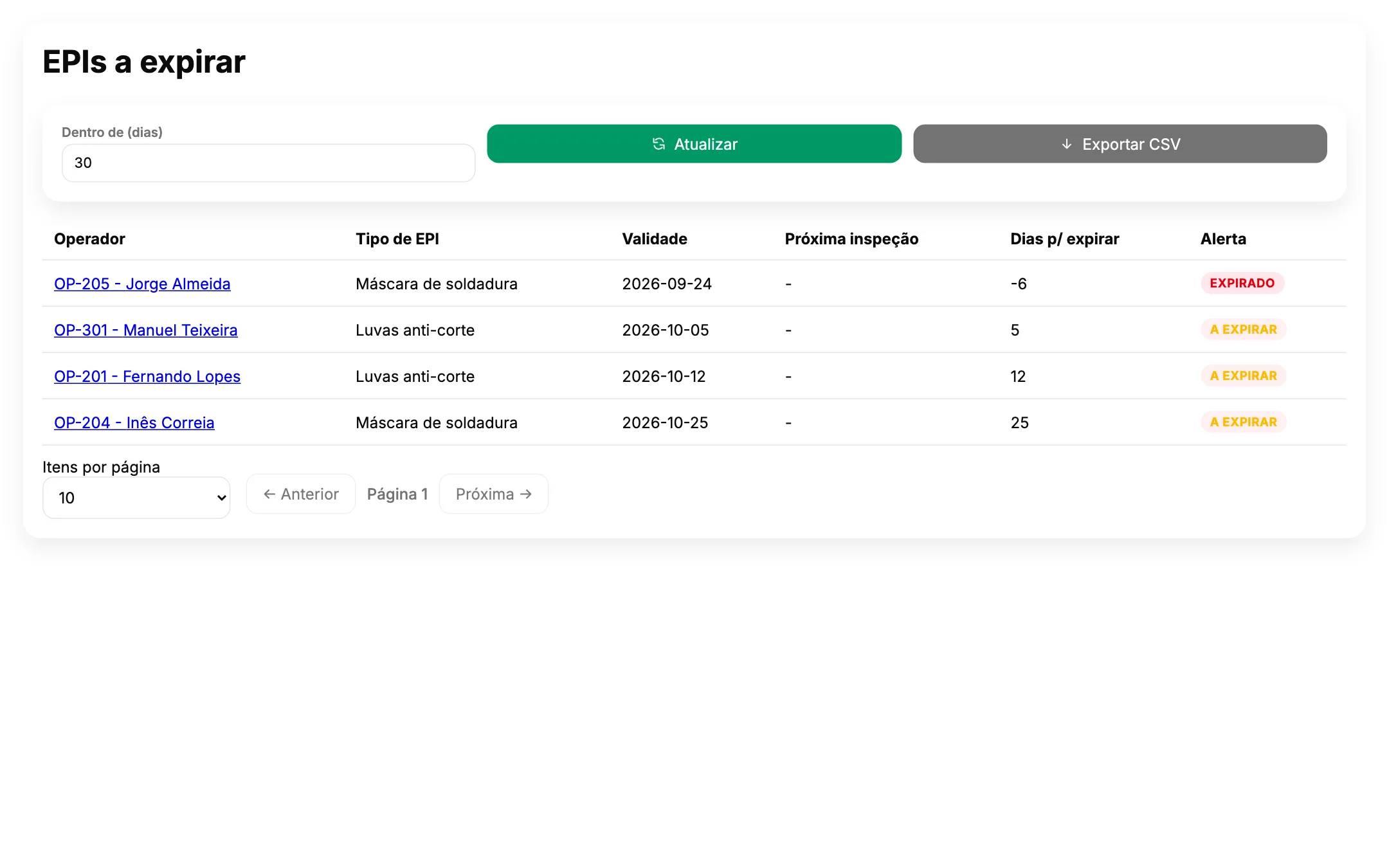
Validity and next inspection for every item issued, a list of what expires in the coming days, and exports for the safety officer and the audit.
The product at work
Compliance at a glance.
Real screens of FabVitals, with demonstration data from a metal industry plant.
Who is compliant, and what expires next
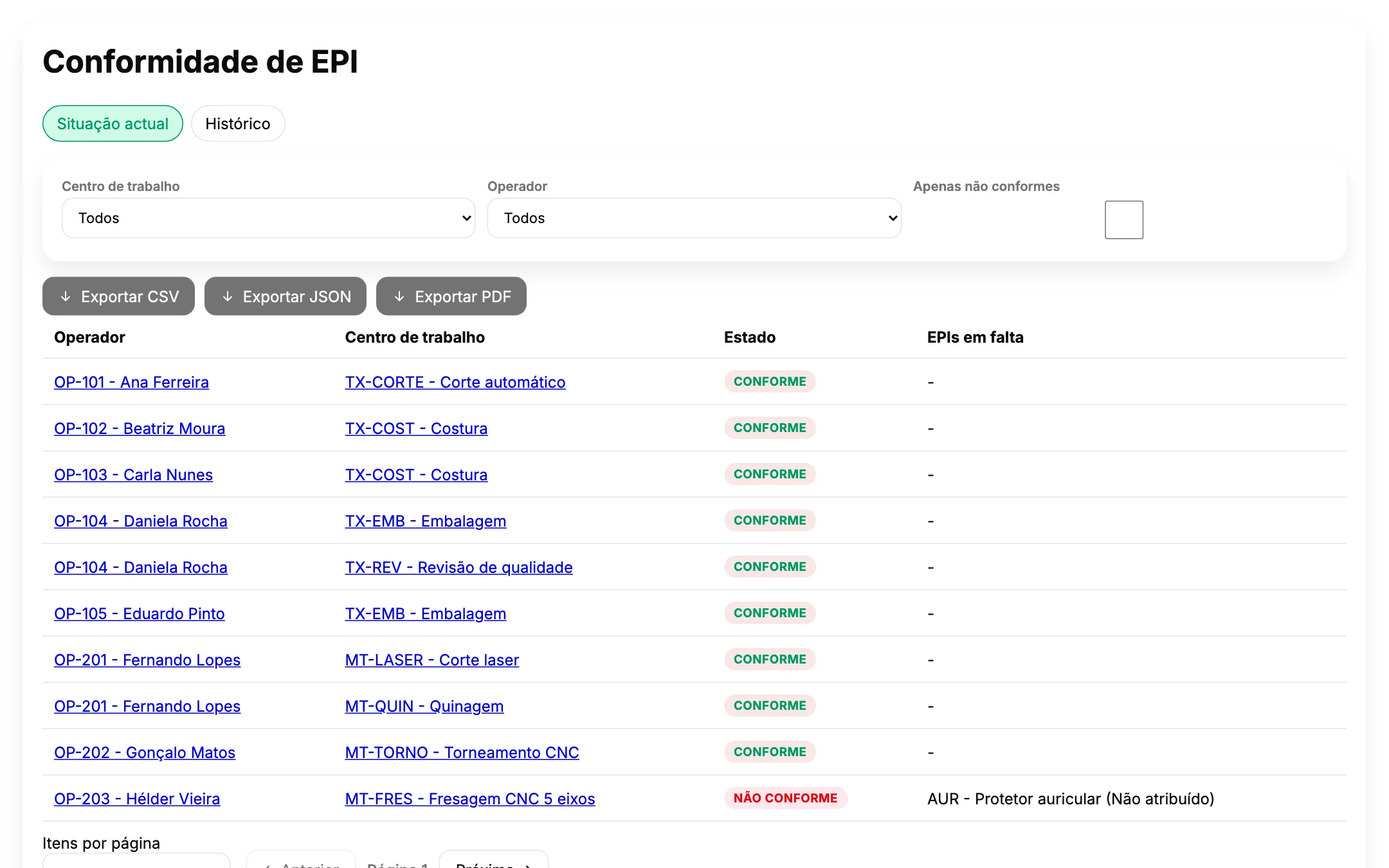
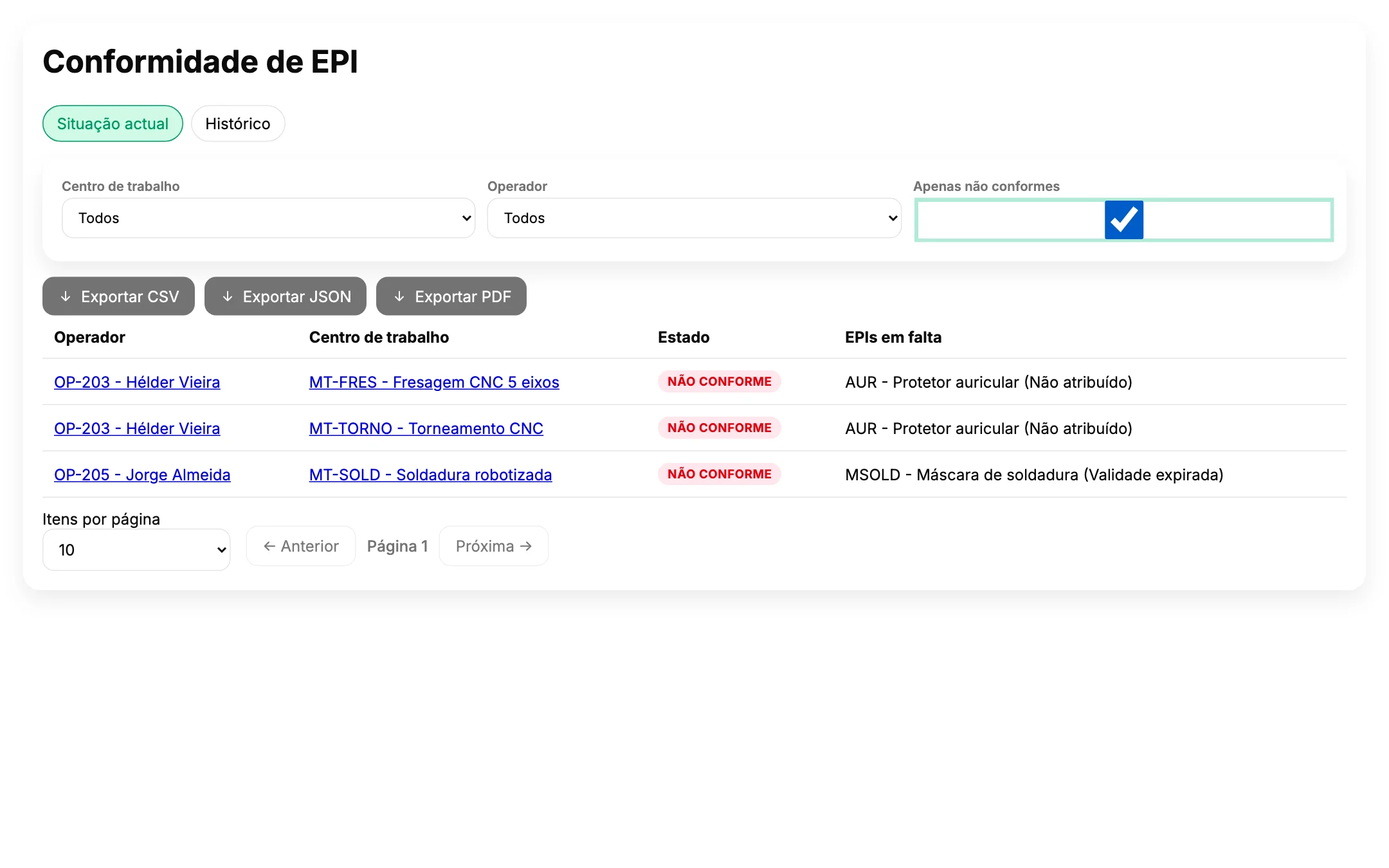
The current situation for every operator at every work centre they work in, with the missing item and the reason, and every item issued with its validity and next inspection. Filter by work centre or operator, see the history of past checks, export to CSV, JSON or PDF.
How it works
First we understand your floor. Then we adapt the solution.
The software is the proof, not the starting point. Every project follows the same three steps, and the first one happens where the work happens.
Requirements on the shop floor
We spend time at the lines and stations: how orders arrive, what is recorded today and where, where information gets lost. You get a written summary of what we found, whatever you decide next.
Adaptation to your process
We configure the solution around how you work — routings, stations, units, the words your people already use — and connect it to the ERP you run. Your process does not bend to fit the software.
Start-up, one area first
We go live on one line or one area, train the people who will use it every day and stay close in the first weeks, when the data shows recording habits before it shows production.
Serves your industry
Built on ISA-95, so it fits how your plant already works.
ISA-95 is the international standard for manufacturing operations. The model underneath is the same for any plant that turns materials into products — the examples below illustrate it, they do not limit it.
Textile and clothing
Cut-resistant gloves at automatic cutting and hearing protection in the sewing room, checked for every operator who moves between lines.
Footwear
Gloves and masks at cutting, gluing and finishing, where solvents and blades make the requirement different at each station.
Metal, plastics and other processing
Ear protection at CNC machining, welding masks at the robotic cell, safety glasses and gloves at laser cutting and bending.
The same holds for processing in general: wherever there are orders, routings, work centres and materials, the model fits.
Start with your process, not with the software.
The first conversation is about how your floor works today, not a product demo. Then we tell you honestly whether this module, another path, or nothing at all is the right answer.